
Contents
- 1 What an STP broker is
- 2 STP versus other execution models
- 3 Order routing and execution flow in STP
- 4 Execution quality: metrics, failure modes, and assessment
- 5 Costs, fees and the economics of STP execution
- 6 Regulatory, operational and counterparty considerations
- 7 Practical implementation notes for traders
- 8 Conclusion
Straight through processing brokers, commonly abbreviated STP, are a dominant execution model in many retail and institutional markets. They route client orders to external liquidity providers or matching venues rather than acting as the counterparty. For traders and portfolio managers who care about execution quality, settlement transparency and conflict of interest, understanding the STP model is essential. This article is a practical, technical description of how STP works, how it differs from alternative models, which execution metrics matter, and the operational and regulatory risks you should expect to manage.
The tone is concise and factual. The reader is assumed to know basic market microstructure terms and common execution benchmarks. The goal is to provide a usable reference for assessing brokers, designing execution plans, and integrating STP execution into broader trading operations.
What an STP broker is
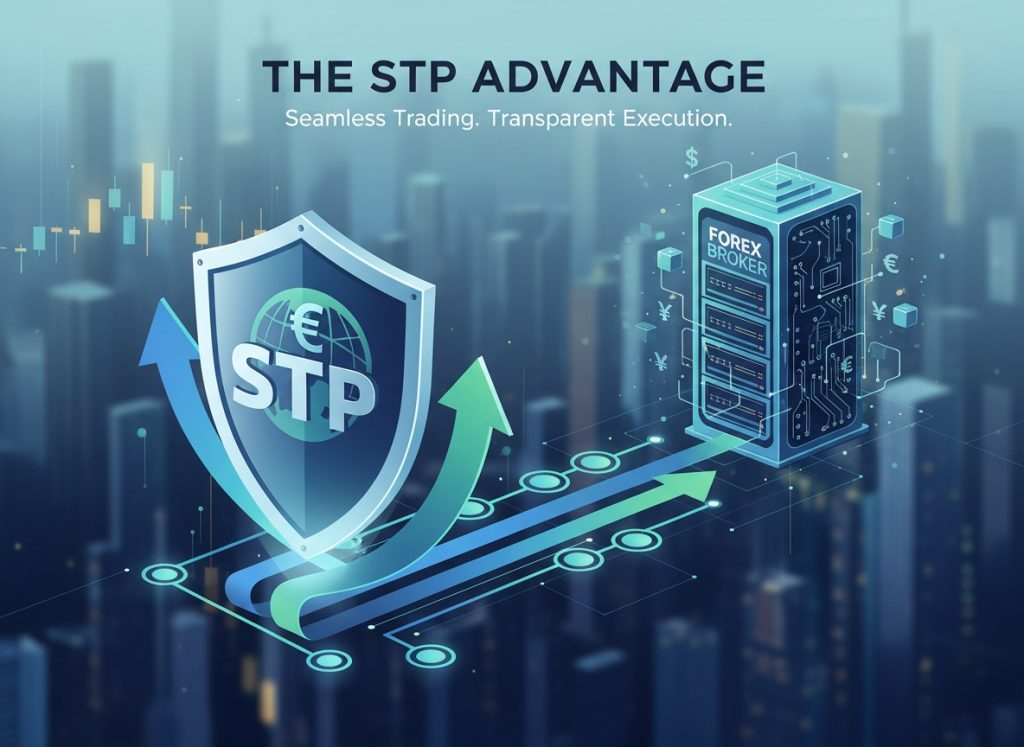
At base, an STP broker is an intermediary that sends client orders onward to external liquidity sources without taking principal risk on the client trade. The broker’s role is routing not dealing. In practice STP covers a range of arrangements. A broker may forwards orders to one or to many liquidity providers, it may publish minutely aggregated prices derived from counterparties, or it may inject client flow selectively to partners that pay referral fees. The defining characteristic remains: the broker does not intentionally fill the trade from its own inventory.
STP appears across asset classes but it is especially common in foreign exchange and derivatives where market infrastructure supports multiple liquidity providers. STP brokers typically connect to banks, prime brokers, electronic crossing networks, alternative trading systems or ECNs. They may provide direct market access via standard protocol such as FIX, or they may act as a sponsored on ramp into a provider’s pool.
Because the broker is not principal the conflict of interest that exists with a market maker is reduced. Yet reduced does not mean eliminated; brokerage economics may influence routing choices. STP firms vary in transparency. Some disclose full routing logic, partner lists, and fee splits. Others provide only aggregate fill statistics and maintain commercial confidentiality about counterparties. For buyers of execution, the degree of disclosure should be a first order evaluation item.
STP implies a two part relationship: an upstream technical link to liquidity sources, and a downstream client interface for order submission and reporting. Both links matter. If the integration to liquidity providers is shallow or the broker lacks robust connectivity, the STP label is cosmetic; execution will reflect that weakness.
You can find and compare STP forex brokers by visiting ForexBrokersOnline.com.
STP versus other execution models
Comparing STP with ECN and market maker models clarifies tradeoffs.
A market maker broker quotes two sided prices and often internalizes client orders. That model can offer stable spreads and predictable fills for small amounts. But it also creates incentives for the broker to manage inventory and to hedge, introducing potential latency and execution slippage if hedges are slow or if internalization skews pricing against clients.
An ECN provides a consolidated order book where multiple participant orders meet under deterministic matching rules. ECN venues are transparent and are designed to let participants post and take liquidity directly. Access to ECNs is attractive where actual order book depth and public price discovery are vital. Many institutional traders prefer ECNs because they minimize single counterparty exposure and because match rules are predictable.
STP sits between those models in practice. It is an agency routing approach rather than a venue. An STP broker can route to ECNs, to market makers, or to liquidity aggregators. If routed to ECNs, clients gain order book transparency. If routed to market makers, clients may get the same execution experience as with internalization, but through an external counterparty. The important distinction is that with STP the broker’s revenue often comes from commissions and referral fees rather than the spread earned by being the other side.
From the trader’s perspective the choice depends on strategy and priorities. If you need transparency and deterministic matching, ECN access may be superior. If you value immediate fills for small orders and accept a potential conflict, a market maker model may be simpler. If you want an intermediary that can reach many providers and hide nothing about routing, best in class STP with full disclosure often wins. Yet not all STP providers are equal; the routing logic, slippage control, and commercial ties are what differentiate them.
Order routing and execution flow in STP
Order routing under STP is an operational pipeline. A client order arrives at the broker’s front end. The broker validates the order, applies the client’s execution policy, and forwards the order to a chosen execution venue or liquidity provider. Routing decisions can be static or dynamic. Static routing sends orders to a single partner. Dynamic routing uses pre trade logic to select the best counterparty given price, available depth, latency and fees.
Smart order routers are a common feature. A router examines the available quotes, the client instruction—such as limit price or time in force—and sends either a marketable order to a venue with sufficient depth or posts a limit on a venue with a high probability of fill. Routers may split large orders across providers to avoid adverse price impact. They may also include post trade logic that re routes unfilled quantity after a timeout.
Settlement paths depend on the underlying product. In exchange cleared environments clearing houses absorb bilateral settlement risk. In OTC markets settlement may be bilateral and that creates a window of counterparty exposure. STP brokers typically arrange clearing sponsorships or use prime brokers that guarantee settlement. This arrangement reduces settlement risk for clients but adds a layer of counterparty for which the client must evaluate credit exposure.
Execution policies commonly include best execution requirements. That means the broker must document the algorithm or the criteria used to pick a counterparty, and it must monitor outcomes. Effective monitoring requires order level logs with timestamps for submission time, routing time, acceptance time by the counterparty and execution time. Without that telemetry a broker cannot demonstrate the quality of routing.
A practical complexity arises when liquidity providers pay rebates or referral fees to the broker. Where payment for order flow exists, routing decisions may reflect commercial arrangements. Professional traders should request routing disclosure and, where possible, route control or the ability to specify permitted venues.
Execution quality: metrics, failure modes, and assessment
Evaluating STP execution requires multiple metrics. Displayed spread is useful but inadequate. Effective spread measures the difference between execution price and a reference midpoint and accounts for price improvement or adverse price movement during execution. Implementation shortfall measures the difference between a decision price and the actual execution price and is particularly relevant for larger orders or those with time pressure.
Fill rate and time to fill are critical for limit orders. Queue position and visible depth across provider feeds determine fill probability. For market orders slippage and depth cost dominate. Traders should analyze execution by size buckets and time buckets. Execution that looks efficient for small orders can be poor at scale.
Latency is another core metric. STP routing is only as effective as the connectivity to counterparties. If a router routes to a provider whose feed is delayed by network congestion the theoretical best price at the time of routing may be stale in practice. That produces rejects and re quotes which are a form of implicit cost.
Failure modes include stale pricing, routing to illiquid counterparties, rejection or partial fills, and adverse selection where posted passive liquidity is taken by informed counterparties immediately after appearing. Another common failure is partial internalization by liquidity providers: a counterparty may refuse to take a large order or may fill at worse prices after consuming displayed size. Monitoring for these events and having fallback rules to route to alternate providers is a required control.
Transaction cost analysis is the tool of choice. It is necessary to compare pre trade expectations with post trade outcomes. Comprehensive TCA requires order level timestamps, venue identifiers, and post trade market snapshots to reconstruct the market state at execution time. Brokers that refuse to provide such data make independent assessment difficult and should be treated cautiously.
Costs, fees and the economics of STP execution
The economics of STP execution include explicit fees and implicit costs. Explicit fees are commissions, exchange fees and data or connectivity fees. Some liquidity providers also charge minimums or tiered fees. Implicit costs include spread, market impact and the opportunity cost of missed fills.
Routing that seeks top of book pricing may produce lower explicit cost because the broker earns less in spread related income. Routing to providers that pay referral fees can reduce client commission, but the client may be worse off if the routing prioritizes fees over price. Evaluating net execution cost requires combining commission paid with realized slippage and any rebates or price improvements captured.
For marketable retail flow in FX, for example, STP brokers often charge a small markup on the interbank price and a commission per lot. For institutional equity flow routed through multiple providers, the economics depend on maker and taker fee schedules at each venue which can create incentives to post or to take. The precise calculation is per trade and per venue and firms that expect to post liquidity should analyze net rebates after factoring in cancellation rates and adverse selection risk.
Financing, margin and capital usage add another layer. For strategies that leave inventory overnight or intraday, the cost of capital for held positions affects net return. Where clearing sponsorship is used, clients implicitly accept exposure to the sponsor’s credit terms. A full economic model therefore includes cost of capital, clearing fees, and the expected distribution of fills by venue.
Regulatory, operational and counterparty considerations
Regulation imposes duties and creates protections. Best execution mandates in many jurisdictions force brokers to document routing logic and to demonstrate that they are not systematically disadvantaging clients. Trade reporting rules require timely disclosure of executed prices and volumes. In derivatives and exchange traded markets central clearing reduces counterparty credit risk but introduces the clearing member as a critical counterparty to evaluate.
Operational risk is central. Connectivity tests, simulated load testing, monitoring for message throttles, and documented incident response processes are minimum expectations. A broker with opaque operational metrics or limited pre deployment testing capacity increases execution risk. Latency, packet loss and congested message queues are real causes of slippage and may produce discrepant fills that are hard to reconcile post trade.
Counterparty exposure is often indirect. An STP broker routes to a liquidity provider who may in turn route or internalize. Clients must understand the clearing path. If a provider fails to settle the broker or its clearing sponsor is exposed. The client is exposed to whatever residual failure scenarios are not absorbed by a central counterparty.
Compliance risk is also present. Payment for order flow is legal in many jurisdictions but it triggers disclosure obligations. In addition, the broker and the client share obligations around anti money laundering and know your customer procedures. Robust compliance processes reduce legal and reputational risk.
Practical implementation notes for traders
Implementing STP execution requires a staged approach. Start with a small volume pilot to gather order level telemetry. Test connectivity during different market regimes and confirm the broker provides venue identifiers for fills. Conduct TCA and compare broker reported performance with independently gathered market data if available.
Specify execution policies explicitly. If you prefer direct route to certain counterparties disallow others or require the broker to only route to venues that meet stated latency or liquidity thresholds. If the broker refuses to accept such constraints treat this cautionary. Also evaluate fall back logic: when the top route rejects or times out what is the next action? The presence of deterministic fall back rules avoids undesirable partial fills.
Monitor cancellation rates and the ratio of posted to executed passive orders. High cancellation rates suggest strategy arbitrage or that producers of liquidity are gaming posted orders. For aggressive strategies check re quote incidence and rejection rates.
Integrate risk controls. Limit size per venue, implement maximum order life, and apply real time inventory limits to avoid concentration. Ensure reconciliation is automated and that exceptions are escalated. Finally assess whether the net execution improvement from STP access covers the overhead of managing routes and the cost of data and connectivity.
Conclusion
STP brokers provide an agency style routing service that can deliver access to multiple liquidity providers and reduce principal conflicts. That advantage only materializes with rigorous transparency, robust connectivity and disciplined monitoring. Traders and allocators should evaluate STP providers on routing disclosure, execution telemetry, fee alignment and operational resilience. Where those elements align, STP execution reduces hidden costs and increases choice. Where they do not, STP becomes a label rather than a benefit and the trader pays implicit execution tax without gaining real access.
This article was last updated on: February 10, 2026